Monday, May 24, 2010

Progress

The Project is bringing some brilliant people out into the public domain. We meet Baba last week. A 20 year veteran of the market. He came over from Turkey with his brother and picked Dalston because it was where he saw people mixing and being given a chance. A complete character who started modelling with his produce when we asked for a photo.

Baba runs a fish bar and has seen troubled times of late. He is going to one of the main features in the Installation.


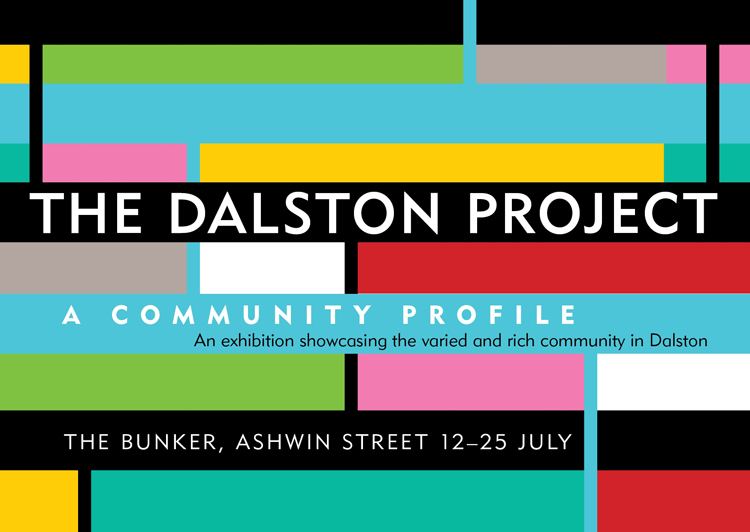
The installation is now secured and will be taking place in the fantastic setting of the World War II bunker behind the Print House, just off Ashwin Street.

If you've met Baba or have an interesting story about anyone you now on Ridley Road or E8 generally, get in touch.

Tuesday, April 20, 2010

The Project is coming along. We have a venue, (pretty crucial that) we are looking for more people to take part in the exhibition so get in touch if you feel you have a story.

People and places we are talking with at the moment:

The gents at Sound and Music on Dalston Lane


Their story encapsulates exactly what we are working towards, people with a history and a strong link to the community; people know and depend on them. Their business is threatened with closure. Hackney Council has helped them so little its untrue. Wait for the exhibition to see more.

If you know them or want to tell us about Sound and Music,
get in touch

Market stall fruit sellers in Ridley Road


They have been there for ages, decades even, flogging to a changing collection of consumers, always ready to give an anecdote or observation. Their story is colourful and touches many.

>> If you know Mark and Peter from the very first fruit stall on Ridley Road Market, get in touch

Thursday, February 18, 2010


What is and was


E8, Dalston, mainly...and other areas...but mainly Dalston. The place is unique in East London right now, and probably comparable with only a handfull of other areas in the country: its in mass transit, from infrastructure through demographic to fiscal. A 'visual slum' being transformed. But it was once a fine area. An area of wealth and community. Neighbours knowing neighbours and living together. Does this not happen any more...?

What we now have is a fractured affair with alienation and disenfranchisement from society. The community feel has supposedly gone; its dried up along with the cement for the new apartments.

However, with all this being said, there are pockets of Dalston that remain warm, inviting and community driven. The ethnic diversity has factored in this; it's made it seem fragmented but for this negative perception there is one parallel that pulls all these strands together - all these people live next door to each other. They breath each other's air.

The Dalston Project aims to get in amongst this complex concrete district and run all the threads of existence, no matter how disparate and begotten they appear, through one door for all and each to come see.

The Project has a task to unite the people by showing them the humanity of all their neighbours. Not in some grand way, not in a patronising way, but by video and audio, by heart and touch. Unbiased and unreproachable, the Dalston Project will be a living showcase for all that is fine and good with the 'community', when most people think one doesn't even exist.

Wednesday, February 17, 2010

Interesting Article on Dalston's slide towards social Gentrification

Gentrification no thanks

Dave Hill guardian.co.uk, Tuesday 20 May 2008

The scheme centres on the redevelopment of the old Dalston Junction railway station (closed in 1986) as part of the northern extension of the East London Line, but also includes the construction of new shops and homes, a library and a public square. Its backers - Hackney council's Labour leadership, former Labour mayor Ken Livingstone, Transport for London and the London Development Agency - say it will regenerate the centre of Dalston. So do the house builders Barratt, whose east London MD claims that the scheme "will finally lift Hackney into another league".

For Michael Rosen, though, "regeneration" is a fig-leaf word to cover something else. "What's happened," he writes, "is that the Labour party has lubricated the wheels of big property developers and retail magnates in order to 'regenerate' an area. But it hasn't been 'regenerated' for the people living and working there. They've been shoved out."

I can't speak for readers of Socialist Worker, but three of the most thoughtful and informed visitors to my little blog - fellow Hackney residents all - responded strongly to Michael's argument, each in a different way.

The first to comment was Felix, whose local knowledge puts mine to shame. Citing Charles Booth's famous map of late 19th century London poverty, he noted the affluence of the Dalston of that time and rather tartly, he made the point that if house prices in the street where Michael lives are anything to go by, it's been "coming up" again for quite some time. Michael responded: Felix was missing his point, which was that public assets are financing a process whose "net effect ... is to remove the poorest families."

Next came Mark, who objected to Michael's "purely negative" characterisation of bankers and developers, adding that the far left came nowhere in the London elections and observing that the demographics of inner cities have always been in a state of change. Then Glyn popped by. Though a Liberal Democrat, he expressed similar concerns to Michael's about "long-established Dalston residents being pushed out".

The exchanges continued, with Michael inviting Felix to imagine a walk through a future "regenerated" Dalston in November, "past the half-empty Starbucks, and boarded up "retail opportunities" and the empty flats because the yo-pros (young professionals) have gone home to mum and dad for the long weekend, because Dalston is so 'awful'", Glyn insisted that he wasn't opposed to "regeneration" as such, but wished it could be done with more consideration for people like him. He wrote that the rent he pays to a private landlord in Clapton has "risen by 12% this year," and that with the Olympics on the way, "Soon, I will not be able to afford to live here any longer". He won't be able to afford a new Barratt apartment in the future Dalston Square either: most of those cost over £300,000.